

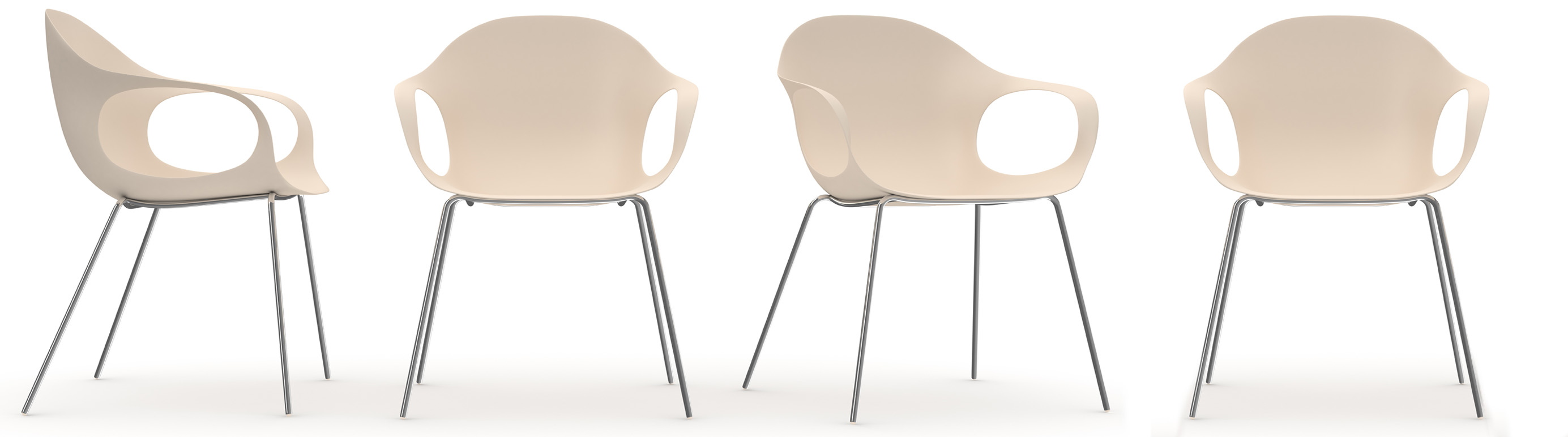
Design Patent Law
Whereas utility patents protect the technical aspect of a creation, design patents protect its ornamental element. Design patents cover the aesthetic appearance of industrial and handicraft items. They are also referred to by terms such as "industrial designs and models".
The subject matter of the protection afforded by design patents has a certain affinity to copyright law. However, given its industrial relevance, design patent law forms part of industrial property protection.
The protection afforded by design patents covers two-dimensional designs and three-dimensional models of an item. The design of an item must be such that it creates an impact on the viewer's sense of shape and colour.
To uphold his rights against third parties the author of a design is advised to apply for registration of the design or model with the German Patent and Trademark Office or with the Office for Harmonization in the Internal Market (Trademarks and Design). After application for registration of the design and its entry in the Design Register, the proprietor enjoys protection against any reproduction of the design.
Other essential requirements for the granting of protection are that the design or model should be new, unique and industrially utilizable. Protection extends to any unauthorized reproduction of the registered design or model. It lasts for five years and can be renewed for up to 25 years.
What is a design?
In legal terms, a design refers to the two- or three-dimensional appearance of a product or part thereof, resulting in particular from the characteristics of the lines, contours, colours, shape, surface structure or materials of the product itself or its decoration. A design can be used to protect the external appearance of products such as packaging, furniture, food, vehicles, clothing, electronics, etc. Graphical user interfaces (e.g. in apps), patterns, typographic typefaces, animations and even spatial arrangements of objects in exterior and interior spaces (e.g. in shops and restaurants) can now also be protected as designs.
How do I obtain design protection?
Design protection under the German Design Act (DesignG) is obtained exclusively by applying for registration of the design in the register of the German Patent and Trade Mark Office (DPMA). Similarly, a design can be entered in the register of the European Union Intellectual Property Office (EUIPO) with effect in all EU member states. At the same time, a design can be protected in all EU member states for a period of three years by a so-called unregistered EU design if it was first made available to the public within the EU. However, the scope of protection of an unregistered EU design is very limited. Finally, design protection can also be obtained outside the EU, either as an international registration under the Hague Agreement in almost 100 countries around the world or as national designs in further countries.
What do "novelty" and "individual character" mean?
Designs are only protected if they are new and have individual character.
A design is considered new if no identical design – i.e. a design that differs only in insignificant details – has been made available to the public before the date of application. Designs that have been published with the consent of the designer or his legal successor during the twelve months prior to the date of application (so-called grace period) are also considered new.
A design has individual character if its overall impression, from the perspective of the so-called informed user, differs from the overall impression of an earlier design. A design must therefore also differ sufficiently from similar, previously known designs in order to be protected.
Only if both requirements – novelty and individual character – are met can a design enjoy protection and form the basis for claims against third parties.
What needs to be considered when registering a design?
The following points in particular must be taken into account when registering a design:
- Suitable reproductions
The scope of protection of a design is determined by the reproductions submitted with the application. This is because they reveal the features of the design that are to be protected. German designs can have up to ten reproductions, EU designs up to seven. It is important that all views reproduce the appearance of one and the same product. They must not depict several products and must not contradict each other. Attention must also be paid to the correct perspectives, backgrounds, possible disclaimers, etc.
- Product specification
The design application must contain a specification of the products in which the design is to be incorporated or to which it is to be applied. The products must be classifiable in a single class of the so-called Locarno Classification. It should be noted, however, that the registered design can be used for any product and not only for the one specified in the application.
- Multiple application
If you want to register several designs at once, you can do so cost-effectively by means of a so-called multiple application. The EUIPO allows up to 50 designs per multiple application, the DPMA even allows up to 100. The only requirement is that the same owner and, if applicable, the same representative must be specified for all designs. This means that it is also possible to submit designs for products with different Locarno classifications as a multiple application.
- Limited examination
During the registration process, both the DPMA and the EUIPO only examine whether the application meets formal requirements, e.g. the reproductions submitted. In particular, they do not examine whether the design is new and has individual character. This is only examined by the offices or a court if the design is to be cancelled at the request of a third party or if claims are asserted based on this design.
How long does it take for my design to be registered?
As the examination of the design application is limited to formal requirements, a design that does not give rise to any objections is usually entered in the EUIPO or DPMA register within a few days.
Can my design be cancelled after registration?
Yes. On the one hand, third parties can apply to the competent office for a declaration of invalidity of a registered design or apply for such a declaration in court proceedings. In most cases the reason for cancellation is the lack of novelty or the lack of individual character of the design. On the other hand, the owner of the design can also simply renounce the design by making a declaration to the office or not renew its protection, which also results in the design being cancelled.
Do I have to use a design?
No, unlike trademarks, designs are not subject to any obligation to use them.
How long is my design protected?
German designs and registered EU designs are protected for a maximum of 25 years after registration and must be renewed every five years at a cost.
Unregistered EU designs are protected for three years after their first publication. It is not possible to renew the protection unless the design is registered within the grace period.
What should I do if my design is infringed by a third party?
If third parties use a design without permission that is identical to your protected (earlier) design or has a similar overall impression, you are entitled to various claims. The most important claims are aimed at preventing further infringements, compensation for the damage suffered as a result, and information about the extent of the infringements.
Design infringements can often be permanently stopped by issuing a warning letter with a request to submit a cease-and-desist declaration with a penalty clause. To do this, you should hire an attorney specialising in design law, whose costs are usually reimbursed by the opposing party. It is always necessary to engage an attorney if you wish to enforce your claims in court.
How else can my design be protected?
Three aspects are particularly relevant:
- Designs of products that are an expression of personal intellectual creation – i.e. particularly original or creative – may be protected by copyright under certain circumstances. One advantage of such protection is that, in the event of infringement, it triggers claims that are in some cases more extensive than those under design law and lasts significantly longer (in Germany: 70 years after the death of the author). The disadvantage is that, at least in Germany, copyrights cannot be entered in a register and therefore often have to be proven at great expense in the event of a dispute.
- Under certain circumstances, instead of registering a design, it may also be possible to obtain trademark protection for a design, for example in the form of a figurative mark or a 3D mark. This has the particular advantage of not being limited in time. However, the requirements for registering a trademark – in particular the proof of the necessary distinctive character – are significantly higher.
- In addition, unfair competition law (UWG) can also offer protection against product imitations. However, it is essential that the product has a so-called competitive character and that the imitation is classified as unlawful due to special circumstances. It should also be noted that corresponding claims become time-barred six months after knowledge of an infringement.

 Berliner Freiheit 2,
 +49 (0)30 - 2062 30